Cha' Hinthel, Cha' Xo (One People, One Fire)
OUR ANNUAL GATHERING
OCTOBER 17th & 18th, 2026
Each year, the Noyo Bida Truth Project brings community together for Ch’a Hinthel, Ch’a Xo: One People, One Fire—a gathering centered on Indigenous culture, creativity, community, and relationship.
This year, One People, One Fire is presented in collaboration with the 10th Annual Native Arts Expo, bringing more than 30 Native artists, culture bearers, performers, and community organizations together for three days of art, music, cultural sharing, conversation, and connection.
The Native Arts Expo takes place Friday and Saturday, followed by the Second Annual One People, One Fire beginning Saturday evening and continuing through Sunday.
Free and open to the community.

23rd ANNUAL TULE BOAT FESTIVAL
JULY 23rd - JULY 25th, 2026 - BIG VALLEY RANCHERIA
We invite you to attend Big Valley Rancheria's
23rd Annual Tule Boat Festival. We are
currently accepting applications for vendors,
cultural demonstrations and information
booths.
We actively encourage environmentally friendly
booths. Please limit plastic and water waste.
Traditional activities and demonstrations
desired.
F O R M O R E I N F O R M A T I O N P L E A S E C O N T A C T
Sarah at 707-349-4040 or email sryan@bvr-nsn.gov
The Noyo Bida Truth Project is the fiscal sponsor for the RRRISE Tribal Table who is collaborating with Big Valley Rancheria
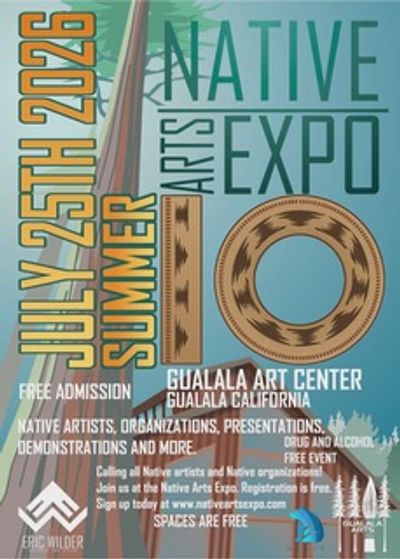
Native Arts Expo
JULY 25th, 2026 - GUALALA Art Center
Free Admission
Gualala Arts Center
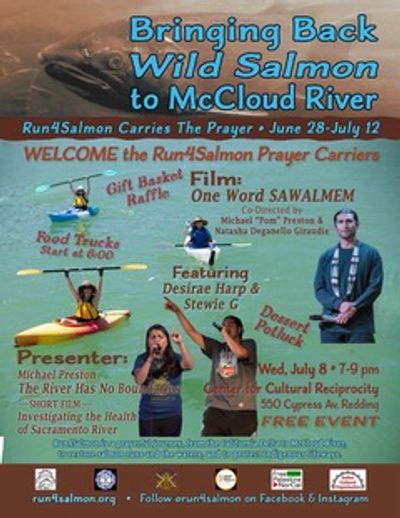
Bringing Back Wild Salmon to McCloud River
JULY 8th, 2026 - 7-9 PM | Redding,
June 28th - July 12th | Run4Salmon Carries the Prayer
Film: One Word Sawalmem
Food Trucks
Presenters: Michael Preston
Featuring: Desirae Harp & Stewie G
Gift Basket Raffle
Essay Contest Winners
Sunday, June 28th, 2 PM at Town Hall
The Noyo Bida Truth Project announces the winners of their Fourth Annual Essay Contest. The First and Second Prize winners will read their essays and receive their prizes Sunday, June 28 at 2 p.m. at Town Hall, 363 N. Main Street, Noyo Bida, CA. (Fort Bragg)
First Prize is $1,000 and Second Prize $500.
The prompt for the contest was “ Yes, (or, No) the name Noyo Bida (The Fishing Place in Northern Pomo) should be returned to the City of Fort Bragg. Prizes will be presented by the three Essay Contest Judges, who are unaffiliated with TNBTP.
First Prize goes to Rowan Carr, who is a FBHS student and will be a senior in the fall. She is a founding member of the jazz club and president of the spectrum club. In her free time she enjoys writing, playing trumpet and piano, and spending time with family.
Second Prize goes to Simon Peter, who is a writer and musician with a passion for freedom, community and ancestral connection. Simon enjoys a simple life growing food and sacred cactus, building with cob, and creating music. He adds: “It is an honor to be recognized by The Noyo Bida Truth Project.”
The program is free and open to all.
Town Hall
363 N Main Street
Fort Bragg (Noyo Bida)
Sponsored by The Noyo Bida Truth Project.
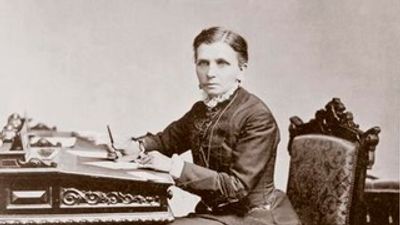
Kelseyville or Konocti? Teach-In by Nora Moore
Sunday, May 31, 2 p.m. at Town Hall | A Report from the Front Lines of Lake County
Nora Moore has been a Lake County resident since the Valley Fire in 2015 and has worked in housing as a manager and Real estate sales agent throughout her time in the community. In 2023, she joined Citizens for Healing, where she contributes to efforts focused on community restoration and equity by digital and social online support. She is deeply committed to supporting those who have been historically and currently oppressed and is dedicated to advancing meaningful change, repair, and prevention of further harm. Citizens for Healing has been waging a campaign to end the town name of Kelseyville, named for murderer and sex trafficker Andrew Kelsey and apply the indigenous name of Konocti in its place.Nora has produced a number of videos about this effort.
See them here.
And she produced one on efforts to rename Fort Bragg.
Please come and be part of the conversation.
Town Hall
363 N Main Street
Fort Bragg (Noyo Bida)
Sponsored by The Noyo Bida Truth Project.
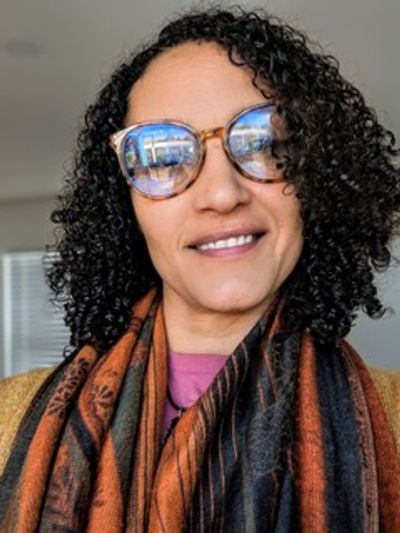
Working in Education - Native American Student Success
Sunday, April 12 @ 2 p.m, Community Room of the Fort Bragg Library, 499 East Laurel St.
Kyle Whiterock is a Yokayo & Big Valley Pomo artist, actor, director. He serves as a Student Retention Specialist at Mendocino College.
Kyle has worked in Indigenous Communities for over 5 years, and continues to work to uplift and motivate community youth. He is currently pursing his Bachelor's in Social Work at Cal Poly Humboldt.
Sunday, April 12 at 2 p.m
Community Room
Fort Bragg Library
499 E.Laurel Steet
Fort Bragg
This program is neither sponsored by nor endorsed by the Mendocino County Library.

Fourth Annual Essay Contest
Research, Write and Win $1000 | Submissions Close March 31, 2026 at 5 p.m
The Noyo Bida Truth Project Invites Entries to Two Essay Contests
Contest #1: Yes, the name Noyo Bida (The Fishing Place in Northern Pomo) should be returned to the City of Fort Bragg
Contest #2: No, the name Noyo Bida (The Fishing Place in Northern Pomo) should not be returned to The City of Fort Bragg
Requirements:
Essay Length: 1000 to 1500 words
Limited to residents of the City of Fort Bragg who will be at least 18 years old by May 1, 2026.
Deadline for submission:
Submissions open: February 1, 2026 and close March 31, 2026 at 5 p.m.
Submissions must be received via email only to thenoyobidatruthproject@gmail.com.
Essays should be attached in Word or Google Docs. The name, street address, and phone number of the author should be in the email but not in the attached essay.
Winners will be announced in May 2026.
Prizes:
First Place: $1,000, Second Place $500 in each of the two contests.
Criteria for judging:
- Grammar & language mechanics
- Writing fluency & style
- Evidence of research, including footnotes or text references and a Works Cited page and must include references from at least two books that can be found in our local library.
- Essays produced by AI are not accepted.
- Writers must include at least 3 in-text citations: e.g. a quotation would be cited as “Madley, p. 71” and the accompanying Works Cited page would read: “ Madley, Benjamin. An American Genocide. New Haven: Yale University Press, 2017.
- A logical research-based well-defended argument for their position
- Essays should be formatted using 12 point New Times Roman font with 1” margins on all sides.
- To establish eligibility the author must state in their email submission: “I am a resident of the City of Fort Bragg and this essay is my own work alone.”
- Winning essayists agree to allow The Noyo Bida Truth Project to reproduce their winning essays and will read their essays publicly in June and be recorded for inclusion on our website, FaceBook page, YouTube channel and TikTok.
Judges:
Three community leaders, writers and educators, without affiliation with The Noyo Bida Truth Project.
The Noyo Bida Truth Project is a 501(c)(3) educational nonprofit incorporated in the state of California with the goal of educating residents to the need to change the name of Fort Bragg as one step towards racial justice and a reckoning with American history.
This essay contest is solely a project ofThe Noyo Bida Truth Project, and is not affiliated with any other entity.

The Lessons of The Past: Exploring Local History
Bruce Levene, February 21 at 2 p.m. in Town Hall, 363 N. Main Street, Fort Bragg.
Bruce Levene has chronicled the Mendocino Coast for decades, penning books on our local brushes with Hollywood in his book Mendocino and the Movies: Hollywood and Television Motion Pictures Filmed on the Mendocino Coast and James Dean in Mendocino: The Filming of East of Eden as well as our artistic history in Mendocino Art Center: A 50 Year Retrospective, our gastronomy in Mendocino Wines and Cooking, and our more violent history in Black Bart: The True Story of the West’s Most Famous Stagecoach Robber.
He formerly published The Mendocino Review magazine, highlighting the writing, art and photography of local residents.
However, we’d like to focus on his oral history work in: Fort Bragg Remembered, a Centennial Oral History, Mendocino County Remembered: An Oral History, and Voice and Dreams: A Mendocino County Native American Oral History.
He will talk about how he accomplished his histories, what he learned from this interviews, how our region has changed in the last 100 years, and the uses of the past.
Talk Saturday, February 21 at 2 p.m. in Town Hall, 363 N. Main Street, Fort Bragg.

First Nations in the Westport Area During the Historic Era
January 18, 2026, 2:00 pm, Community Room of the Fort Bragg Library, 499 East Laurel St.
Thad M. Van Bueren earned a B.A. in 1978 and M.A. in 1983 from San Francisco State University in the field of Anthropology. As a professional archaeologist he has worked to protect and mitigate impacts to prehistoric and historical resources in California for development projects that must comply with environmental laws. Thad has lived in Westport since 1994, conducting many local investigations as a private consultant, or while employed by Caltrans and State Parks. He has worked closely with descendants of the first people to inhabit California, as well as more recent immigrant communities.
His talk will focus on his investigations of First Nation campsites surrounding the northern outpost of the Mendocino Reservation in the 1860s and early 1870s. A question and answer period will follow.
This program is neither sponsored by nor affiliated with the Fort Bragg Library.

WAS FORT BRAGG A 'SUNDOWN TOWN?' Sunday, November 30, 2025,
Speaker: DR. PHILIP ZWERLING
Dr. Philip Zwerling serves as Chair of The Noyo Bida Truth Project and formerly worked at the University of Texas, Rio Grande Valley as an Associate Professor and Chair of the Creative Writing Department. He is the author of eight published books. most recently : “In Search of The Thin Man: Dashiell Hammett, William Powell, and the Classic Film Series."
More about our speaker here: https://www.philipzwerling.com/
He says of his presentation: “I started with the question of why our town would be named Fort Bragg when it was incorporated in 1889 even though the military Fort had been abandoned in 1864; the original native inhabitants had already been marched over the hill to Round Valley and 15 of the original Fort buildings had been demolished and stripped of their lumber by white settlers; and Braxton Bragg was already known as an enslaver and a Confederate traitor?
My second question was 'Why was the City of Fort Bragg 99% white for its first 60 years, from the censuses of 1890 to 1950?' Then I examined the newspapers for repetitive stories of white violence directed here against Chinese, Japanese, and African Americans much as it had once been directed against Indigenous people. Was Fort Bragg a Sundown Town?"
Learn about Sundown Towns here: https://justice.tougaloo.edu/.../using-the-sundown-towns.../
Please come and be part of the conversation and share your stories.
This program is free and open to all.
Land Back Movement
Speaker: Nikcole Whipple
The Land Back Movement is an Indigenous-led initiative claiming environmental justice in ancestral territories. To date, Indigenous first people suffer from systemic injustices invoked by colonial government systems through forced removal and assimilation. The Land Back Movement promotes Indigenous sovereignty, culture, and historical stewardship practices. Beyond land back, the movement aims to reestablish cultural land management practices uplifting Indigenous governance, revitalizing language, returning ecological healing and community well-being through traditional connections to the lands and water.
Our Speaker
TNBTP Board Member Nikcole Whipple is a member of the Round Valley Indian Tribes. She is a water protector and policy advocate who works with organizations providing professional development in Native Land Stewardship and (TEK) Traditional Ecological Knowledge. Her work experience includes the exercise of Tribal Rights in creating policy initiatives to provide equitable recommendations in the oversight of cultural resources and the collaboration of community partners to provide cultural events for Tribal youth and families.
Sunday, October 26 at 2 p.m.
The Fort Bragg Library Community Room
499 E Laurel St, Fort Bragg
The Fort Bragg Library neither supports nor endorses this program.

TNBTP Board Member Nikcole Whipple, Round Valley tribes
Native American Fiber Program August 2025 Webinar
Nikcole Whipple is an advocate for restorative justice, a water protector and cultural fire lighter. She has experience working with Tribes and Indigenous led organizations providing environmental advocacy, youth led advocacy and environmental connections, traditional ecological knowledge curriculum and community presentations. Her passion is centered in the protection of cultural practices through Indigenous led stewardship projects supporting cultural healing and wellness with the intention of conserving our ancestral lands and waters.
August 2, 2025 Teach-in

The Noyo Bida Truth Project sponsors a special program on Saturday, August 2, at 1 p.m. at Mendocino College, Coast Campus, 1211 Del Mar Drive, Fort Bragg, Room 112.
Our special Guest Speaker, will be Tatiana Cantrell, The Missing and Murdered Indigenous People (MMIP) Director for the Pinoleville Pomo Nation.
Dr. Cantrell has worked with children and families in Lake and Mendocino Counties for the past 25 years. She has spent the past several years working with local indigenous communities to address historical and generational trauma by removing barriers to services, forming collaborative relationships with community agencies, and individualizing family and case plans to meet people where they are at. She is a current faculty member at Mendocino College in the Child Development Department.
The Missing and Murdered Indigenous Peoples (MMIP) crisis refers to the disproportionately high rates of violence, including murder and disappearances, experienced by Indigenous people, particularly women and girls, in the United States and Canada. This crisis is a serious issue with deep historical roots in colonization and its ongoing impacts. Locally it had roots in the Mendocino Indian Reservation overseen here by soldiers at Fort Bragg and continuing through the Indian schools in Mendocino County into the 20th Century.
This program is free and open to all.
The above photo is of a participant in the Greater Than Fear Rally & March in Rochester Minnesota, 2018. Photo by Lorie Shaull